
NXTBlue helps growing teams with startup consulting, business automation, and practical digital systems-so more of your traffic turns into measurable outcomes.
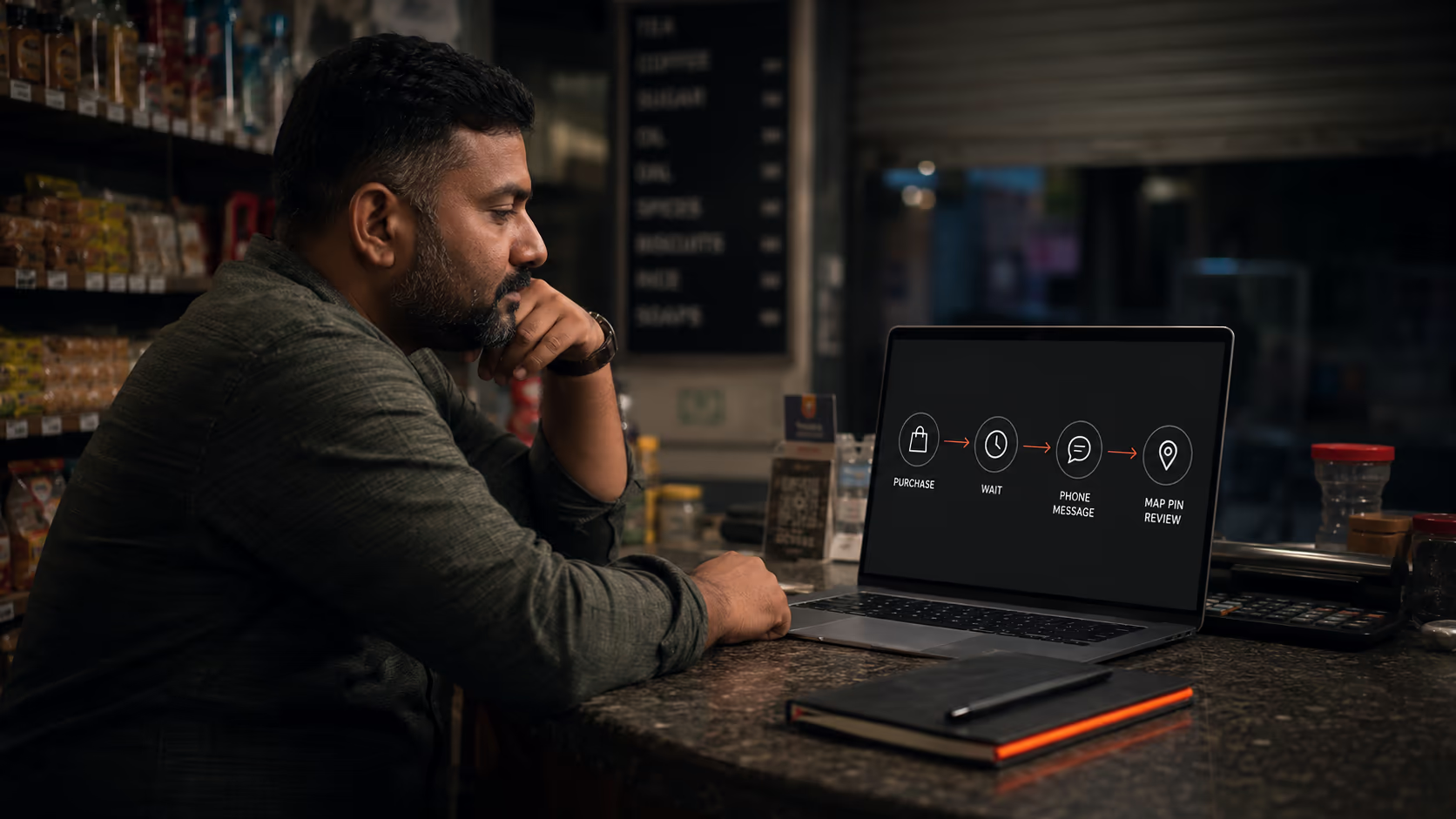
For owner-led businesses that lose Google reviews after good work: a WhatsApp review engine waits 24-72 hours, sends one ask plus one reminder, and stops the chase living in someone's head.
Short answer
A customer finishes with you. They are happy. They pay-or the order lands, or the ticket closes. You move to the next job. Three days later you remember: I meant to ask for a Google review.
They are not angry. They are busy. They will not open Maps on their own.
That pattern shows up in service work, shops, and online businesses alike. The work was fine. The ask lived in someone's head. Competitors with fresher Google Business Profile reviews slowly look safer on Maps-even when your delivery is better.
This is an operations leak, not a marketing slogan problem.

Buyers skim Maps and Search before they call, book, or buy. Stars and recent comments sit next to your pin. Thin or stale reviews make even strong work look risky when price and location look similar to a competitor.
Reviews do not invent demand alone. They often decide which similar option gets the call. Fresh, specific Google Business Profile reviews support trust and local visibility; they are not a guaranteed rank hack by themselves.
What you lose when the ask stays manual:
After a clear completion event, your system waits a short window, then sends a polite WhatsApp message with a direct Google Business Profile review link. At most one reminder. Someone owns the exceptions. The rest does not depend on memory.
That is WhatsApp review automation-not a robot leaving fake stars. The customer still decides. You remove the chase.
It sits next to inbound messaging work: for leads that go cold, see WhatsApp customer response automation. For the Diagnose → Build arc, see Automation & AI.
Purchase / visit / job / order done
        ↓
Wait 1-3 days (fit your business)
        ↓
WhatsApp review request + Google link
        ↓
Optional: one reminder
        ↓
Done
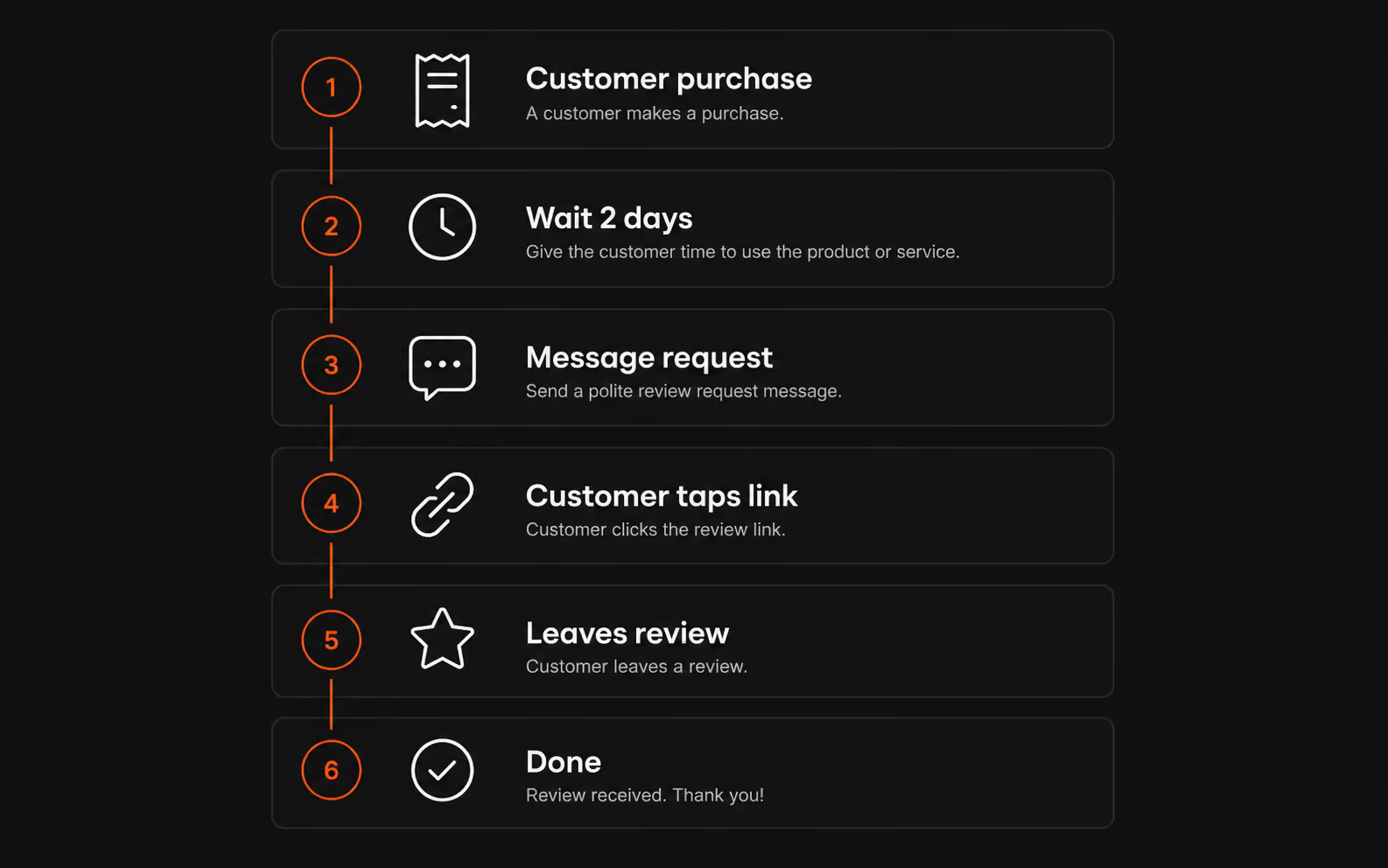
Use an event you already know: invoice paid, appointment completed, order delivered, ticket closed. If completion never lands in a system, fix capture first-sometimes with a lead-capture website-before you automate the ask.
Ask when the outcome is clear, not while the job is unfinished. For most teams, 24-72 hours works.
| How work finishes | Typical wait |
|---|---|
| Same-day service or walk-in | Same evening or next day |
| Appointment / consultation | 1 day after |
| Shop purchase | After purchase or delivery |
| Online order | After delivery (or 2-3 days after install) |
| Ticket / invoice-led work | 1-2 days after close or payment |
Short thanks, willing tone, one Google review link. No scavenger hunt through your profile. No "please search our name on Maps."
Example structure (adapt to your voice):
Hi
{{name}}, thank you for choosing{{business}}. If you have 60 seconds, a Google review helps other customers find us:{{review_link}}. No pressure-only if you are happy to share.
If there is no click after a few days, one gentle reminder is enough. Then stop. Constant nudges train people to mute you.
For many owner-led teams, WhatsApp is already where bookings, payments, delivery, and status live. Open rates stay higher than email for the same customers, and the review link is one tap on the same phone they use for Maps.
Email still helps when WhatsApp is not your primary inbox. The engine is the same: trigger → wait → ask → stop.
If the business still lives only in personal chat history, you may also need a clearer owned home-see when Instagram and WhatsApp businesses need a website.
| Manual chase | WhatsApp review engine | |
|---|---|---|
| Who remembers | Owner or whoever is free | System + owner for exceptions |
| Consistency | Drops on busy weeks | Same timing every eligible customer |
| Follow-up | Easy to forget | One scheduled reminder |
| Scale | Breaks as volume grows | Holds as volume grows |
Manual can work at five customers a week. At fifty, memory loses.
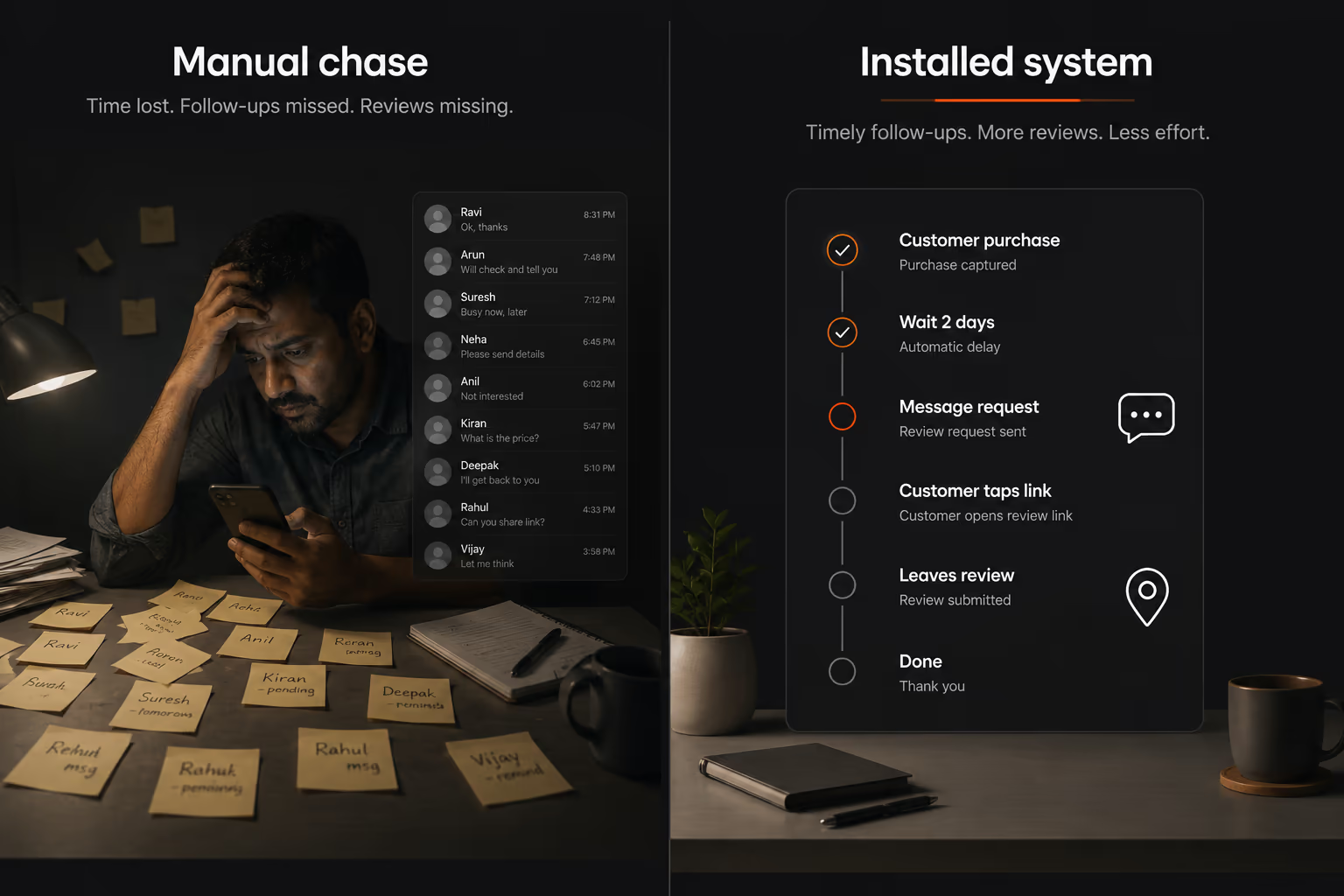
A review engine fits when:
It is usually not the first fix if you lack a clear offer, or if inbound leads already die from slow replies. In that case, start with response automation or a service diagnosis.
NXTBlue is a solutions consultancy for owner-led businesses. We do not sell a one-size review gadget. We start with a paid diagnosis: is the bottleneck reviews, lead response, capture, or ownership? Then we build the smallest system that fixes it.
| Engagement | What you get |
|---|---|
| Diagnose | Map the real bottleneck-written plan, not a pitch deck |
| Build | Trigger, wait rules, WhatsApp templates, one-reminder stop rule, handoff docs |
| Run (optional) | Script tweaks and light iteration after launch |
Exact scope and price are quoted after diagnosis. Book a free strategy consultation if you want that conversation next.
Related reading:
We do not promise a fixed number of new five-star reviews per month. We do not claim this alone will make you #1 on Maps. We do not treat paid or gated reviews as a tactic. We do not describe Engage as generally available-it is on a prelaunch waitlist at engage.nxtvortex.com. For how we work, see portfolio.
If you are still manually asking for reviews-or forgetting until the moment is gone-start with the bottleneck, not a tool shopping list.
It is a timed workflow that sends a short WhatsApp message with your Google Business Profile review link after a purchase, visit, or completed job, so asking for a review does not depend on memory.
Yes, if you already talk to customers on WhatsApp and finish clear work-service visits, shop purchases, online orders, tickets, or invoices. Most teams start with one trigger, one wait window, and one reminder.
Yes, when you message customers who expect business contact, respect opt-out, and use WhatsApp Business or the Business API with approved templates where required. Mass-messaging cold numbers is not the model.
Yes. The automation sends the request and reminder timing. The customer still chooses freely whether to leave a review on Google-you do not invent or filter ratings.
One clear ask plus at most one polite reminder is enough for most owner-led teams. More than that usually feels like pressure and can hurt trust.
Often yes for early setups. Higher volume or template rules may need the WhatsApp Business API through an approved provider. The right path is part of the diagnosis.
NXTBlue quotes after a paid diagnosis. Light messaging workflows are often scoped like other simple WhatsApp automations once capture, templates, and stop rules are clear.
Yes. We diagnose whether review follow-up is the bottleneck, then build templates, timing, ownership, and handoff docs in a Diagnose → Build engagement-not a one-click gadget.